Certn Centric — Rebuilding a Global Background Check Platform
Certn • 2024–Present

Designing a scalable, self-serve platform across regions, use cases, and regulatory constraints.
Timeline: 2024–Present
Scope: End-to-end platform
My Role: Senior → Lead Product Designer
Impact
-
Launched MVP in a few months (4 checks → scaled to 74 (500+ if you include country variants)
-
Scaled platform to support a growing set of checks and clients
-
Enabled self-serve ordering for Property Management clients
-
Established foundational patterns for scaling across use cases
Context
Certn is a background screening platform that enables businesses to run checks—such as criminal records, credit reports, and identity verification—on applicants for purposes like employment or tenancy.
The legacy Certn platform was not built to scale with the company’s growth. It was slow, not fully accessible, and structured around specific use cases. Different permissible purposes (e.g., employment vs tenancy) were separated into entirely different portals, which simplified the experience but created fragmentation and limited flexibility.
At the same time, Certn was expanding into new markets such as the UK and APAC, introducing additional complexity around regulation, data storage, and what types of checks could be offered in different regions.
Continuing to evolve the existing system while it remained in use was not feasible. We needed a new platform that could support a global, self-serve experience across multiple use cases, regions, and check types.
Certn Centric was built to serve as that foundation.
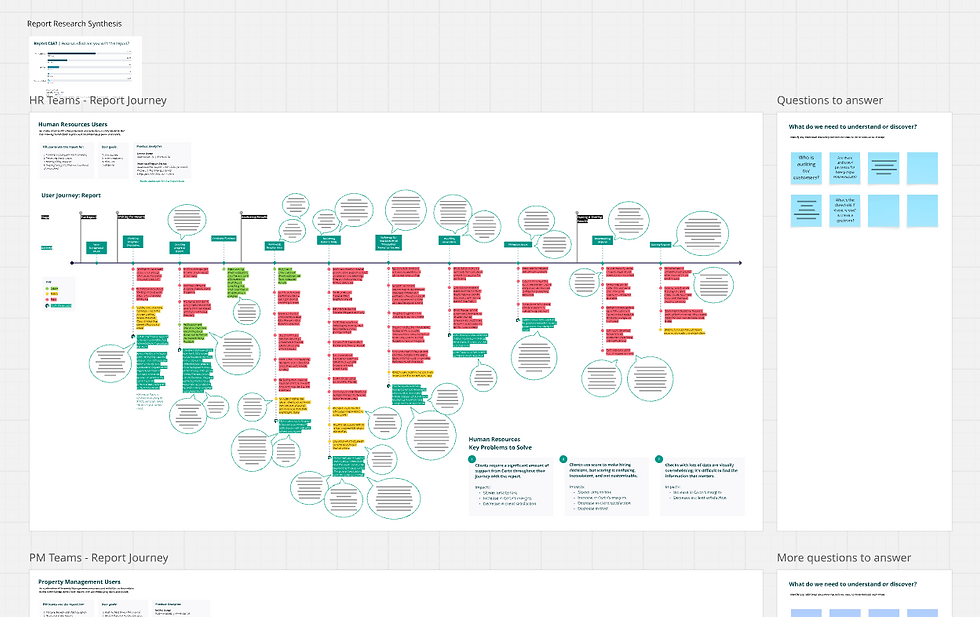


Early stage wireframe concepts of Client Portal
My Role & Scope
At the start of the project, both the Director and Manager of UX had left the company. As a senior designer, I stepped into a broader role, working directly with Product and Engineering leadership to define the MVP and shape the platform direction.
I was responsible for:
-
Designing the end-to-end client portal experience
-
Defining and evolving scalable UX patterns across checks
-
Creating high-fidelity prototypes to support development
-
Expanding the design system to support new product needs
-
Providing guidance across adjacent systems, including Case Management
-
I worked closely with Product and Engineering to balance speed, system integrity, and evolving requirements, while also supporting other designers to ensure consistency across the broader platform.
I worked closely with Product and Engineering to balance speed, system integrity, and evolving requirements, while also supporting other designers to ensure consistency across the broader platform.
Key Challenges
Designing a platform while shipping an MVP
We needed to move quickly to launch, while also laying the foundation for something that could scale long-term.
Legal and compliance constraints
Permissible purpose (employment vs tenancy) affects:
-
Which checks are available
-
What credentialing is required
-
What data can be shown in reports
Fragmented legacy model
Previous systems were separated by use case. Moving to a unified platform introduced new complexity in how these differences were handled.
Scaling complexity
Each check had unique requirements, increasing the risk of inconsistent patterns and one-off solutions.
Engineering constraints
The system used to configure checks (including JSON-driven forms) was complex. Changes were not always straightforward, and implementation cost influenced what could be improved.
Key Decisions
Unifying Experiences Across Permissible Purposes
Context: Legacy Certn separated different permissible purposes into distinct portals, simplifying UX but limiting scalability.
Tradeoff: Maintain separate, simpler experiences vs. Unify into a single, scalable platform.
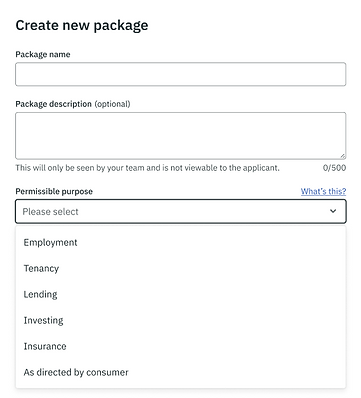
Decision: I advocated for unifying experiences into a single platform, using dynamic logic to adjust available checks, requirements, and outputs based on permissible purpose.
Impact: This increased UX complexity through conditional flows and additional inputs, but enabled a scalable foundation across use cases, regions, and future expansion.
Defining Scalable Patterns Across Checks
Problem: Each check introduced unique requirements, increasing the risk of fragmentation as the platform scaled and more distributed teams built checks.
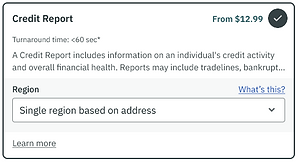
Approach: I defined shared patterns for ordering, data input structures, fulfillment tasks, consumer reports (PDF and responsive web). These patterns were reinforced through the design system and reused across checks.
Tradeoff: More upfront alignment vs faster scaling and consistency later.
Impact: Reduced duplication and created a more cohesive experience as new checks were introduced.


Prioritizing Expansion Over Structural Refinement
Reality: As more checks were added, limitations in the ordering experience became more apparent. While new designs were created to address these issues, implementation costs were often high due to system complexity.
Decision: I worked with Product and Engineering to prioritize continued expansion—adding new checks and supporting business growth—while deferring some structural UX improvements.
Impact: Enabled rapid scaling and delivery against targets, but required extending patterns beyond their original intent, introducing areas for future improvement.

Designing Across the Full Lifecycle
Scope Expansion: The experience extended beyond the client portal to include:
-
Ordering
-
Applicant experience
-
Fulfillment (Case Management)
-
Reporting
Approach: I provided guidance across adjacent systems to ensure alignment in data, structure, and experience.
Impact: Improved system coherence and reduced downstream friction caused by disconnected decisions.

Key Learnings
Systems emerge through shipping, not upfront design. Legal and technical constraints shape the experience as much as any design decision, and scaling exposes weaknesses that simply aren't visible early on — often when there's little runway to address them cleanly.
Systems don't break down when they're wrong; they break down when they're extended beyond their original assumptions. As we rapidly scaled checks and introduced contributions from multiple teams, gaps in early patterns became apparent. What worked for a smaller, focused set of use cases didn't hold as we expanded across purposes, regions, and legacy expectations.
Introducing Core (EMEA) checks into a more generalized global system added further complexity — particularly when existing clients expected continuity with how those checks had previously functioned. Designing more flexible, reusable patterns, including more neutral purpose-agnostic copy, became necessary to support that scale.
Scalability also meant coordinating across systems, not just adding to them. As the number and combinations of checks grew, we had to ensure applicants weren't asked for the same information multiple times. Consolidating shared data collection across checks proved significantly more complex than designing individual flows — it required thinking about how multiple systems interact rather than optimizing any single experience.
The platform continues to evolve as we expand into new markets and capabilities. The foundation is significantly stronger than what existed before — but like most platforms operating at this scale, it's still being shaped by the same forces that built it.
Outcomes
What Worked
-
Successfully launched a new platform within a short timeframe
-
Scaled from an initial set of checks to a broader offering
-
Established reusable patterns for ordering and configuration
-
Enabled a unified experience across use cases
Where It’s Still Evolving
-
The ordering experience does not scale cleanly across all checks
-
UX improvements can be constrained by system complexity
-
Some inconsistencies remain due to earlier tradeoffs
Ongoing Improvements
-
Consistently and labeling alignment
-
Check level status updates
-
AI-driven check creation reducing manual effort and complexity


